Introduction
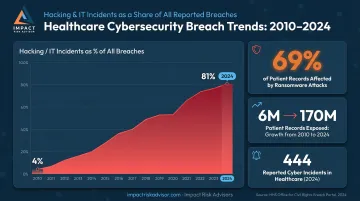
Healthcare is the most expensive industry in the world to suffer a data breach, and has been for 14 consecutive years. According to IBM's 2025 Cost of a Data Breach Report, the average healthcare breach costs $7.42 million, nearly $3 million above the global average. Meanwhile, healthcare recorded 444 reported cyber incidents in 2024, the highest combined total of any U.S. critical infrastructure sector, per the American Hospital Association.
Pursuing ISO 27001 certification without first understanding where your gaps are is an expensive gamble. A readiness assessment is the diagnostic step that tells you exactly what needs fixing before an accredited auditor walks in the door. Done right, it transforms certification from a guessing game into a predictable process.
For healthcare organizations specifically, a generic readiness assessment isn't enough. EHR platforms, legacy medical devices, third-party billing processors, and clinical staff with variable security literacy create a threat environment that standard checklists simply don't capture. Those gaps won't stay hidden; they surface during a Stage 1 audit, at exactly the wrong moment.
Key Takeaways
- ISO 27001 readiness assessment is a pre-certification gap analysis against ISO/IEC 27001:2022's requirements, not the certification audit itself
- Healthcare environments require a sector-specific approach covering EHR systems, legacy devices, and third-party vendor risk
- A structured assessment follows six stages, from scoping and asset inventory through risk scoring, control gap analysis, and a remediation roadmap
- ISO 27001 and HIPAA are aligned on risk management and technical safeguards; a readiness assessment generates evidence applicable to both frameworks
- Skipping readiness means your first look at major non-conformities comes during the certification audit, not with time to fix them
What Is an ISO 27001 Readiness Assessment?
An ISO 27001 readiness assessment is a structured gap analysis that evaluates whether your current information security practices, documentation, and controls align with ISO/IEC 27001:2022, the current version of the standard. That version reduced Annex A from 114 to 93 controls, grouped into four categories: organizational, people, physical, and technological.
Readiness Assessment vs. Certification Audit
These two things are frequently confused, and the distinction matters:
| Readiness Assessment | Certification Audit | |
|---|---|---|
| Purpose | Diagnose gaps before audit | Verify conformance to the standard |
| Conducted by | Internal team or advisor | Accredited certification body |
| Output | Remediation roadmap | Pass/fail certification decision |
| Timing | Before internal audit work | After ISMS is implemented |
The readiness assessment measures the distance between where your organization is today and where it needs to be to pass Stage 1 (documentation review) and Stage 2 (operational verification). This pre-audit step confirms that all standard requirements have been addressed and identifies feedback areas before the formal assessment begins, giving your team a clear view of what still needs work.
Where It Fits in the Certification Journey
The readiness assessment comes first: before internal audits and before engaging a certification body. Its output is a prioritized remediation roadmap the organization works through before the formal process begins. Skipping it is a common mistake; organizations that do often hit Stage 1 with documentation gaps and missing risk registers, both of which qualify as major non-conformities. For healthcare organizations specifically, those gaps frequently involve PHI handling procedures and access control documentation that auditors scrutinize closely.
Why Healthcare Organizations Need ISO 27001 Readiness
The Threat Environment Is Uniquely Severe
Research published in JAMA Network Open tracking U.S. healthcare breaches from 2010 to 2024 shows that hacking and IT incidents grew from 4% of breaches in 2010 to 81% in 2024. Ransomware alone accounted for 69% of all patient records affected by breaches in 2024. Records exposed jumped from 6 million to 170 million over the same period.
Reactive security doesn't work against that trajectory. ISO 27001's risk-based framework addresses healthcare's core vulnerabilities directly:
- Uncontrolled PHI access: access governance and need-to-know controls close the most exploited entry points
- Vendor dependency: contractual security obligations and supplier assessments extend your security perimeter to third parties
- Incident response gaps: documented, tested procedures tied to ISO 27001 Clause 6.1
- Undocumented risk registers: a structured ISMS requires maintaining and reviewing risk treatment records continuously
ISO 27001 and HIPAA: Complementary, Not Competing
HIPAA's Security Rule mandates administrative, physical, and technical safeguards to protect electronic PHI. ISO 27001 is a voluntary international management system standard that provides the structured implementation framework HIPAA lacks. BSI maps HIPAA Security Rule requirements to ISO 27001 controls and supports an "implement once, comply many" approach, where a single set of controls satisfies both frameworks.
A readiness assessment conducted through an ISO 27001 lens simultaneously builds evidence for HIPAA compliance, reducing duplicated effort across your security and compliance program. Impact Risk Advisors evaluates risk assessments against ISO 27001, HIPAA, and other applicable frameworks together, as one integrated program rather than parallel tracks.
Business Benefits That Readiness Unlocks
- Underwriting relevance: cyber liability applications now ask whether applicants hold ISO 27001 certification, making a documented ISMS directly relevant to your insurance posture
- Enterprise procurement: ISO 27001 conformity signals to payers, hospital networks, and health tech partners that you manage information risk systematically
- Sales cycle efficiency: a certified security posture removes friction in vendor due diligence and reduces back-and-forth on security questionnaires
What Happens Without Readiness
The business benefits above assume you arrive at the certification audit prepared. Organizations that skip a formal readiness assessment tend to discover their critical gaps only when an auditor is already in the room:
- Missing asset inventories
- Undocumented risk registers
- Untested incident response plans
Each of these is a major non-conformity: a clause-level failure that halts certification, triggers re-audit fees, and extends the certification timeline by months.
How to Conduct an ISO 27001 Readiness Assessment for Healthcare
Each stage below produces evidence that feeds directly into the ISO 27001 certification process. The sequence is deliberate; later stages depend on the outputs of earlier ones.
Step 1 – Define ISMS Scope
Start by identifying every system, location, personnel role, and third-party relationship that stores, processes, or transmits PHI or other sensitive data. Healthcare-specific examples to evaluate:
- EHR platforms and patient portals
- PACS (radiology archives) and laboratory information systems
- Billing processors and insurance clearinghouses
- Cloud-based telehealth platforms
- Connected medical devices and IoT clinical equipment
Scoping too narrowly creates audit risk. Excluding a telehealth platform because it's "vendor-managed" is a common mistake that surfaces at Stage 1. Scoping too broadly slows implementation. Data flow mapping is the practical tool for drawing the right boundary: follow PHI through your systems and draw the scope line where it stops.
Step 2 – Build a Healthcare Information Asset Inventory
Catalogue in-scope assets across four categories:
- Information assets: EHR databases, patient records, clinical trial data
- Hardware: servers, medical devices, employee laptops, imaging equipment
- Software: billing systems, diagnostic tools, remote access platforms
- Third-party services: cloud providers, outsourced radiology, claims processors
Assign a data classification level (restricted PHI, internal clinical data, public) and a named asset owner to each. Untracked assets, particularly legacy clinical devices running outdated operating systems, are one of the most common readiness gaps in healthcare environments.
The FBI has reported that 53% of connected medical and IoT devices in hospitals have known critical vulnerabilities, with device hardware remaining active for 10 to 30 years.
Step 3 – Identify Healthcare-Specific Threats and Vulnerabilities
Map threats against your asset inventory. Priority threat categories for healthcare:
- Ransomware targeting EHR systems and clinical operations
- Unauthorized staff access to patient records
- Unpatched firmware vulnerabilities in medical devices
- Third-party vendor breaches: SecurityScorecard found 35.5% of 2024 breaches involved third-party access, with 41.4% of ransomware attacks linked to third-party entry points
- Phishing attacks targeting clinical staff
Assess risks across all three CIA dimensions: Confidentiality, Integrity, and Availability. Availability carries more weight in healthcare than in most industries. A system outage that delays medication administration or disrupts surgical scheduling is a direct patient safety risk.
Step 4 – Score and Prioritize Risks
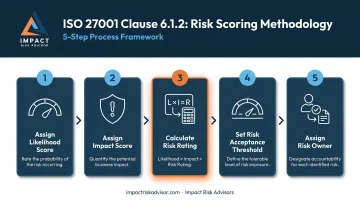
Score each identified risk using consistent likelihood and impact scales. ISO 27001 Clause 6.1.2 requires a repeatable methodology; ad-hoc, judgment-based scoring won't satisfy auditors. For each risk:
- Assign a likelihood score: how probable is this threat given your controls?
- Assign an impact score: what's the consequence for PHI, operations, and patient safety?
- Calculate a risk rating: likelihood x impact
- Set a risk acceptance threshold: risks above this threshold require treatment
- Assign a risk owner: someone accountable for treatment decisions
For healthcare, contextual judgment matters. A non-patchable infusion pump running legacy firmware presents a real vulnerability, but the treatment decision (accept with compensating controls vs. replace) depends on clinical context that no generic scoring tool accounts for.
Step 5 – Assess Control Gaps Against ISO 27001 Annex A
Your next task is mapping current controls against ISO 27001:2022 Annex A. Produce a draft Statement of Applicability (SoA) that lists which controls apply, which are excluded with documented justification, and which have gaps requiring remediation.
Controls most frequently deficient in healthcare readiness assessments:
| Control | Why It Matters in Healthcare |
|---|---|
| A.8.9 – Configuration Management | Legacy clinical devices often have no formal configuration baseline |
| A.5.23 – Information Security for Use of Cloud Services | Telehealth and cloud EHR platforms frequently lack documented security requirements |
| A.8.12 – Data Leakage Prevention | PHI exfiltration paths through email and removable media are often unmonitored |
| A.5.30 – ICT Readiness for Business Continuity | Continuity plans exist but rarely account for clinical system unavailability scenarios |
| A.8.11 – Data Masking | Clinical research data and test environments often use real patient records |
Step 6 – Document Gaps and Build a Remediation Roadmap
Consolidate findings into a prioritized gap register that distinguishes:
- Major non-conformities: clause-level failures that will block certification at Stage 1
- Minor gaps: control weaknesses that need improvement but won't fail an initial audit
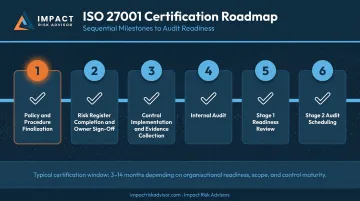
A realistic remediation timeline for a mid-size healthcare organization depends on existing security maturity. Vendor benchmarks from sources like Vanta and ISMS.online suggest most organizations achieve ISO 27001 certification within 3 to 14 months. Key milestones in the roadmap:
- Policy and procedure finalization
- Risk register completion and owner sign-off
- Control implementation and evidence collection
- Internal audit
- Stage 1 readiness review
- Stage 2 audit scheduling
Healthcare-Specific Factors That Shape Your Readiness Assessment
Legacy Medical Devices
Many clinical environments run equipment on operating systems that can't receive standard security patches. ISO 27001 doesn't require every asset to implement every Annex A control; it requires documented justification for exclusions and compensating controls where direct implementation isn't possible. For legacy devices, that typically means:
- Network segmentation to isolate unpatched equipment
- Enhanced monitoring for anomalous traffic
- Vendor contracts specifying security obligations and patch timelines
- Documented risk acceptance by a named risk owner
Full Annex A compliance on a 15-year-old imaging device isn't realistic; documented compensating controls and a named risk owner are.
Third-Party and Vendor Risk
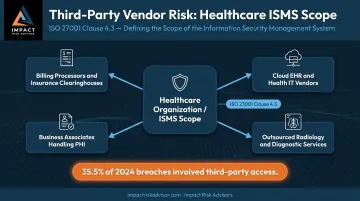
Third-party breaches are a leading source of healthcare data exposure, and ISO 27001 Clause 4.3 and Annex A.5 directly address this. Both clauses require contractual security obligations and periodic assessments for every supplier with access to in-scope information. In healthcare, that scope is broad:
- Billing processors and insurance clearinghouses
- Cloud EHR and health IT vendors
- Outsourced radiology and diagnostic services
- Any business associate handling PHI
Healthcare organizations consistently underestimate this during readiness assessments. Most have BAAs in place but lack the periodic vendor risk reviews that ISO 27001 requires, and auditors will look for both.
Staff and Culture
High staff turnover, mixed technical literacy, and a culture where clinical priorities legitimately override security protocols create a distinct challenge. Readiness must include an honest assessment of:
- Current security awareness training coverage and frequency
- Onboarding security practices for clinical and administrative staff
- Incident reporting behavior: do staff know what to report and how?
- Evidence that training completion is tracked and documented
ISO 27001 Annex A people controls carry real weight in healthcare environments. Documented training, clear reporting channels, and consistent onboarding practices are what auditors look for, and what actually reduce human-layer risk in high-turnover clinical settings.
How Impact Risk Advisors Can Help
Impact Risk Advisors works alongside healthcare IT and compliance teams throughout the readiness assessment and remediation process, staying engaged from initial gap analysis through certification, not stepping away after delivering a report.
Relevant services for this work include:
- Practitioner-led risk assessments that produce audit-ready risk registers evaluated against ISO 27001, HIPAA, and other applicable frameworks simultaneously
- vCISO services for healthcare organizations without an in-house CISO, owning the security roadmap, managing the compliance calendar, and handling board-level risk reporting
- Penetration testing that validates control effectiveness before the certification audit, with compliance-mapped findings and remediation guidance
With over 150 compliance audits supported and long-term client relationships across healthcare and health tech, Impact Risk Advisors understands the operational constraints, regulatory overlap with HIPAA, and audit expectations that make healthcare ISO 27001 work distinct. Ready to assess where your organization stands? Schedule a free consultation; no commitment required, and you'll hear back within one business day.
Conclusion
An ISO 27001 readiness assessment isn't a bureaucratic prerequisite; it's the mechanism that surfaces hidden vulnerabilities before they become audit failures, breach incidents, or OCR enforcement actions. For healthcare organizations operating in the most targeted, most expensive sector for data breaches, that early visibility isn't optional.
Readiness is also not a one-time project. Healthcare organizations that treat the ISMS as a living system will sustain certification without the scramble that comes from approaching it as a point-in-time event. That means keeping security active between audits:
- Updating risk registers as the threat landscape shifts
- Reviewing vendor relationships and third-party access annually
- Maintaining continuous evidence rather than collecting it in a pre-audit rush
Organizations that struggle with recertification are typically the ones that stopped their security program the day they received their certificate. The ones that don't struggle built continuous compliance into how they operate, not how they prepare.
Frequently Asked Questions
What is ISO 27001 and what does compliance mean for healthcare companies?
ISO 27001 is an international standard for Information Security Management Systems (ISMS). For healthcare organizations, implementing it means establishing a documented, risk-based framework to protect patient data across administrative, technical, and physical controls. It supports HIPAA alignment and demonstrates security governance to regulators, payers, and enterprise partners.
What is the difference between ISO 27001 and HIPAA?
HIPAA is a U.S. legal requirement mandating PHI protection through administrative, physical, and technical safeguards. ISO 27001 is a voluntary international management system standard. The two are complementary. ISO 27001 provides the structured governance framework that HIPAA requires but doesn't prescribe, and the standards can be mapped together to support a single-implementation approach.
How much does ISO 27001 certification cost?
Costs vary based on ISMS scope, organization size, security maturity, and consultant and tooling expenses, with full implementation timelines typically running 3 to 14 months. Internal preparation (advisory support, remediation, training) usually exceeds the external audit fee. Request a scope-specific quote from your certification body before budgeting.
What are the 7 elements of healthcare compliance?
The OIG's November 2023 General Compliance Program Guidance identifies seven elements spanning written policies, compliance leadership, training, communication channels, standards enforcement, risk assessment and monitoring, and corrective action for detected offenses. An ISO 27001 ISMS directly reinforces several of these, particularly risk assessment, ongoing monitoring, and policy documentation.
What is the difference between ISO 27001, ISO 27017, and ISO 27018?
ISO 27001 is the certifiable ISMS requirements standard, the foundation. ISO 27017 provides additional controls for cloud service providers and their customers. ISO 27018 is a code of practice for protecting personally identifiable information in public cloud environments. Healthcare organizations using cloud-based EHR or telehealth platforms may benefit from implementing all three alongside their core ISMS.